

Manuscris Serenissima Isabella Clara Eugenia
100 € – 500.000 €
Anno Domini 1608
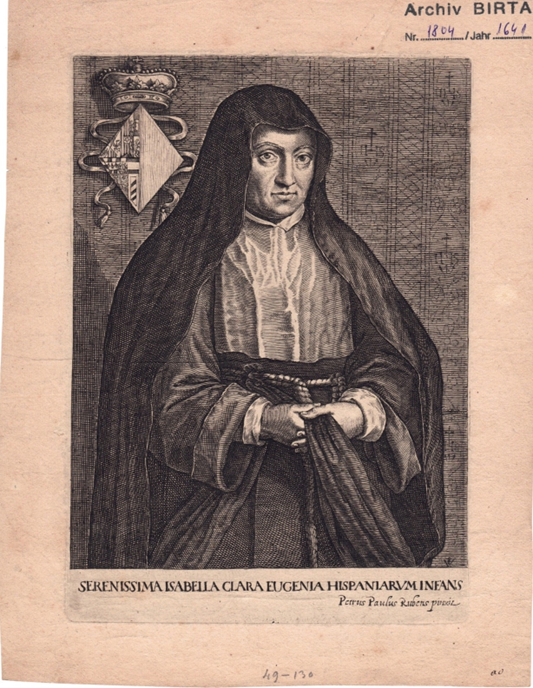
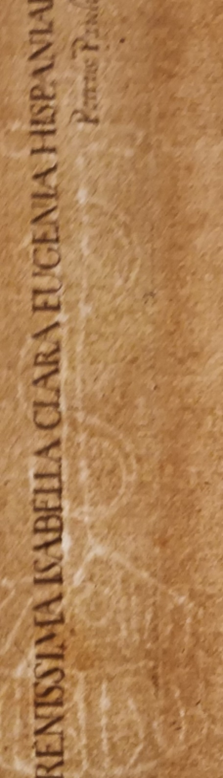
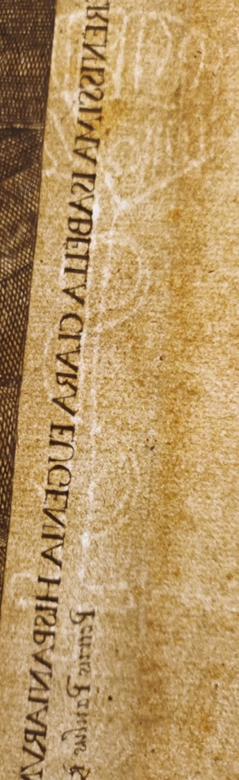
Original paper portrait, year 1641, with note: Petrus Paulus Rubens pinxit (= Painted by Peter Paul Rubens).
Size: 208 x 145 mm (H x W).
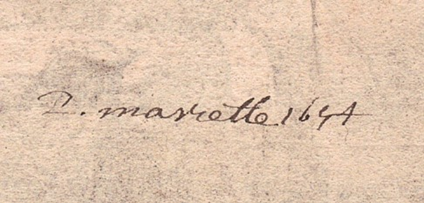
Cover brown ink inscription: P. mariette 1641
Descriere
Manuscris Serenissima Isabella Clara Eugenia
ENGLISH
Four bound paper booklets. Size: 250 x 180 x 5 mm (W x D x H.).
Paper cover. Size: 330 x 250 mm (H x W)
File number: 36 (23 lines per page). Total pages: 72 (3 unwritten)
Enclosure: Portrait of Isabella Clara Eugenia, Infanta of Spain, in habit. Above this is the coat of arms of the sitter. In the margin the name and function in Latin.
Original paper portrait, year 1641, with note: Petrus Paulus Rubens pinxit (= Painted by Peter Paul Rubens).
Size: 208 x 145 mm (H x W).
Cover brown ink inscription: P. mariette 1641
DEUTSCH
Vier gebundene Papierhefte. Größe: 250 x 180 x 5 mm (H x B x D). Papierumschlag. Größe: 330 x 250 mm (H x B).
Zahl der Blätter: 36 (23 Zeilen pro Seite).
Gesamtseiten: 72 (3 ungeschriebene Seiten)
Beilage: Porträt von Isabella Clara Eugenia, Infantin von Spanien, im Habit. Darüber das Wappen des Dargestellten.
Am Rand der Name und die Funktion in lateinischer Sprache.
Original Papierporträt, Jahr 1641, mit Vermerk: Petrus Paulus Rubens Pinxit
(= Gemalt von Peter Paul Rubens).
Größe: 208 x 145 mm (H x B).
Hinterseite mit brauner Tinte beschriftet: P. mariette 1641
ROMÂNĂ
Patru caiete de hârtie legate.
Dimensiuni: 250 x 180 x 5 mm (H x L x Gr.).
Coperți de hârtie. Dimensiuni: 330 x 250 mm (H x L).
Număr file: 36 (23 rânduri pe pagină).
Total pagini: 72 (3 pagini nescrise).
Manuscrisul este însoțit de o fila separată cu portretul Isabellei Clara Eugenia, Infanta Spaniei, în habit. Deasupra este redată stema personajului.
La margine – numele și funcția în limba latină.
Portret original de hârtie, din anul 1641, cu notă: Petrus Paulus Rubens Pinxit
(= Pictat de Peter Paul Rubens). Dimensiuni: 208 x 145 mm (H x L).
Pe verso este scris cu cerneală brună: P. mariette 1641
SRPSKI
Četiri uvezane papirne knjižice. Veličina: 250 x 180 x 5 mm (Visina/Širina/Debljina).
Papirne korice. Veličina: 330 x 250 mm (V x Š).
Broj listova: 36 (23 reda po stranici). Ukupno stranica: 72 (3 nepisane stranice)
Prilog: Portret Izabele Klare Eugenije, Infantkinje iz Španije, u habitu.
Iznad portreta se nalazi grb. Na margini naziv i funkcija na latinskom jeziku.
Originalni papirni portret, godina 1641., sa beleškom: Petrus Paulus Rubens Pinxit (= naslikao Peter Paul Rubens).
Veličina: 208 x 145 mm (V x Š).
Smeđim mastilom na poleđini ispisano: P. mariette 1641 – Pjer Mariet 1641
FRANÇAIS
(Transcription)
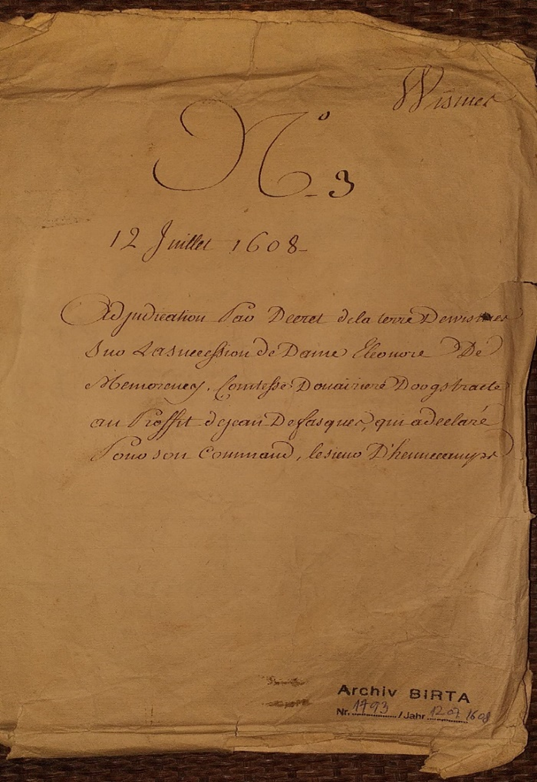
Résumé de la couverture du livre :
Wismess N° 3, 12 juillet 1608
Adjudiecation Par Décret de la terre dewismes sur La succession De Dame Eleonore De Montmorency (Memorency), Comtesse Douairière D'(h)oogstraete au Proffit de jean Defasquer, qui a Declaré Sous son command, le sieur D’hannescamps….
Lettres de Decret de la terre et Seigneurie De Wismes du 12 juillet 1608.
Albert et Isabel Clara Eugenia infante D´Espagne par la grâce de Dieu archiducs D´austrice ducs de Bourgogne Lothier, Brabant, Lembourg Luxembourg et De Geldres contes D´hasbourg flandes, Artois, Bourgogne thirol palatins et de haynnauh d´hollande zelande, namur et de zutphen, marquis Du l´empire de rome Seigneurs De frize de Salins malines Des Cité Ville et pays D´Utrecht, Doneryssel et de Groninghe, a tous ceulx qui ces presentes nos lettres de Décret verront ou lire, oyront, Salut comme messier jehan vaudezlaen chevalier sieur de Schriel Grootloo Regisseur administrateur de La maison mortuaire de feue dame Elenore de Montmorency, comtesse Douariere D´hoogstrade, auroit pour l´jnumerosite Des Crediteurs de Laditte maison mortuaire jmpetré nos lettres Exemtoriales, en Datte du quatorzieme de juillet quinze Cens nonante nœuf, pour pouvoir vendre par Décret et Subhastation aulcuns Biens trouvés en icelle maison mortuaire et En vertu D´icelles nos lettres Exemtoriales par francois de Brume huissier ordinaire de notre grand Conseil, fait saisir et mettre En nos mains et Dejustice la terre et Seigneurie De Wismes avec les appartenances et dependances, Le dit huissier auroit fait devoir De s´informer en notre ville D´arras de qui, icelle terre et Seigneurie pouvoit etre Tenuë, et pour Recouvrer Les Denombreuieurs D´icelle, faus avoir trouvé autre qu´un Vieu, non plus en notre Ville D´arras, que Celle de St. Omer, Dont on ne pouvoit tirer aucun Entendement pour le suivre, et ayant finallement Entendu qu´icelle Seigneurie Etoit tenuë de L´advocrie De therouane appartenante au Sieur Dallouaigne, il se seroit autruy addressé audit Sieur, ou il n´avoit aussi trouvé autre Denombrement qu´un Vieu Registre et après soustenement dudit Sieur que Laditte terre et Seigneurie étoit tenue de Luy acause de La susd: advocrie, et non D´autre Sieur, et que Suivant ce ladite feue dame Comtesse auparavant Son trèpas avoit autrefois avec luy voulu faire Certain, accord ou appointement touchant Les Droits Seigneuriaux Si avant qu´elle la vendoit, De maniere qu´jl se seroit transporté vers La personne de Guillaume proutoille jadis receveur de laditte terre et Seigneurie, lequel ne luy aiant aussi Sceu faire avoir aultre Denombrement qu´un Vieu, Dont il avoit une partie et Seullement dit De Bouche qu´jcelle terre et Seigneurie de Wismes etoit tenuë de Lad. advocrie de therouane Et De L´éveché de St. Omer et que par ordonnance jl L´avoit autrefois relevé Es Respectives Lieux, quoy Entendu Ledit huissier Se Seroit le quinzieme de janvier seize Cens a La Requete dudit administrateur transporté En notad. ville de St. Omer, En laquelle Ville jl auroit Aussi fait trois Crieés Et la quatrieme d´abondant, tant Devant les Vailles de notre maison jllecq que En L´Eglise Dudit Wismes, Dont La premiere de marché audit St. Omer avoit été faite Le susdit jour, La seconde Le vingt neufrieme jour Dudit mois, la troisieme, Le Douzieme de fevrier En suivant, et La quatrieme et Derniere le vingt Cinquieme D´jcelui mois, Et Celles D´Eglises audit Wismes le trentieme Dudit mois de janvier seize Cens, treizieme de fevrier. En suivant, et La quatrieme et Derniere le vingt sixieme D´jcelui mois, aiant ledit huissier Ensemble Jean Zeant, huissier Extraordinaire de La residence De notre ville de St. Omer, achacune Criées, affixé des grands billets Sous La signature Dudit huissier ordinaire, tant a L´eglise Cathedrale de St. Omer que houbette au marché au bled, et aux portes de Lad. Ville et l´huys de L´Eglise dudit Wismes, Le tout afin que chacun seroit adverty desdittes criées, et vente, et que personne n´En pourroit pretendre jgnorance y aiant inseré qu´jcelle terre et Seigneurie De Wismes apendances et Dependances ses hameaux, comme Saint Pierre a fainte avec une eglise parochiale, qui Etoit Secours de L´Eglise dudit Wismes, Cantimerle, Jmarival, Fourdebecque, Salverques, Flomaisnil, et Cocquempot Etoient tenus de L´advocrie de therouane à dix Livrer parisis De relief, et vingt Sols parisis de camberlage et De L´Eveché De St. Omer asemblable relief, aiant haute, moienne et Basse justice, avec un Bailly, Lieutenant, cinq Echevins, et Deux sergeans et qu´a jcelle terre et Seigneurie appartenoit un chateau et jardin, contenant En tout avec Les fossés dud: chateau Environ sept mesures, jtem en rentes Seigneurialles En argent Echeantes au noel.
DeChacun an, portantes avec Le fief De morival, et L´arrentement de la cense, En tout huit vingt huit Livres trois sols neuf Deniers, jtem En Bled mesure De notre ville De St. Omer, avec ledit fief De morival (corrigé à la main de morinal) Echeantes audit noël, Treize rasieres, huit Bignets/Biguets un Lot, item en aveine y Comprins L´arrentement Six vingt Sept Rasieres, Sept Biguets, trois pintes et Demy, item en chappons, trois Cens soixante un Chappons, et trois quarts, item En oisons seize oisons, item En Gelines Cinquante huit et trois quarts D´une, item Encores En rentes de recoignoissances Escheantes audit noel, primes En argent cinq Deniers, jtem une pellote, jtem Deux Bougeons, jtem une Douzaine D´aguillette De chievrotin jtem und aguille jtem Demis quarteron de Chire, et un voire Double, Dont les terres qui Doivent Les susd: rentes et recoignoissances Doivent au Sieur, a La vente Le cinquieme denier, et a La mort pour Le relief Le Double, selon La prisée annuelle Des Grains et plumes jtem sept mesures et demy de prest flotisse, jtem le grand terrage, huit Du cent des advestures annuellement, jtem Le petit terrage et Disme qui se prend au terroir De marival alencontre La Chapelle de St. Jean Evangeliste En prend moitie par moitie, jtem Droit De tonlieu et afforage, jtem un jardin Des Robars contenant six mesures Qui se Donne En ferme D´an En an, jtem trois Bois, appellé L´un Sargérel, contenant Environ vingt une mesures, L´aultre De troncquoy, contenant Dix-huit mesures, et Le troizieme Salvecques, contenant Environ Dixhuit mesures, Dont on vend par an Dix ou Douze mesures et moins, jtem Encoire un molin De pierre à vent Baimal Dudit Wismes appendences et Dependences, jtem que D´icelle terre et Seigneurie etoient tenus Dix Sept ou Dixhuit fiefs, Dont Le Sieur profitoit a La vente, Don et transport, Le cinquieme Denier a Divers reliefs, un a dix florins aultre àquatre florins aulcuns à Cinquante Sols, aulcuns a trente Sols, aulcuns a vingt Sols, et au[l[cuns a Dix Sols. Le tout parisis, avec telles haulteurs préeminence et prouffit que Lesdits Sieurs avoient Eu De tous temps, ou pouvoient avoir prouffité En Laditte terre et seigneurie appendences et Dependences Et qu´il huissier Exposoit et mettoit jcelle en vente par Criées et subhastation au plus offrant et Dernier Encherisseur, aux Charges et conditions qu´on declareroit au jour qu´on allmeroit La Chandelle et que Le marché se passeroit, pour Des Deniers En procedant payer et Satisfaire Les Crediteurs De Lad. maison mortuaire, suivant La sentence de preference et Collocation rendue en notre Grand conseil, et aussi les Depens De L´execution et procès En laditte matière de Décret, et qu´on En feroit quatre Criées De marché et D´Eglise De quinzaine En quinzaine sans aucune Distinuation en notre ville De St. Omer, et Wismes respectivement, et qu´En faisont lesdittes quatrièmes Et Dernieres Criées, on Declareroit les jour, heure Et place, ou L´on allumeroit Laditte Chandelle, passeroit la vente et Donneroit la paulines de Laditte rente et qu´après Seroit ledit marché passé en notre d. Grand Conseil, ala levée Du seau Des Lettres de Decret, partant S´il y avoit aucuns ou aucunes personnes veuillans mettre aprix Laditte terre et Seigneurie appendances et Dependances, ou bien s´opposer aladitte vente, Criées et subhastations, pretendans aucuns Droits, actions ou rentes sur jcelle, ou Sur les Deniers procedans D´icelle vente, qu´ils se pourroient trouver pardevers ledit huissier, ou En son absence pardevers ledit huissier Extraordinaire audit St. Omer, lieu Desa residence qui continueroit lesd. secondes et troisiemes Criées et Sublications, et qu´ils seroient recus En leur oppositions, apeine que Les Deffaillans Seroient privés, Deboutés Et forclos atoujours de Leurs pretendus Droits et actions Suivants Les ordonnances De notre Grand conseil, Lesquels Billets Contenoient En oultre par aultre article que Ledit huissier ordinaire avoit fait et faisoit par jceluy Billet en vertu Des susdittes Lettres Exemtoriales, Commandement de par noms aux manans et habitans Dudit Wismes, fermiers Deprets, Bois, et molin, De ne payer dès Lors En avant audit Guillaume Coutoille, aucunes rentes fermes ou rendages eschins et a echeoir a peine de payer second fois tant et jusqu’à ce qu’iceluy Coutoille aura aultre ordonnance ou formifusion dudit administrateur ou qu’il auroit donné autre nouvelle caution pour deservir la recepte dudit Wismes laquelle interdiction ledit huissier avait fait le dix septième dudit mois de janvier seize cens à Guillaume Lefebvre lieutenant Bailly (étant le bailly établi) Francois Reauward, Robert Leclercq et Guillaume Gamiot.
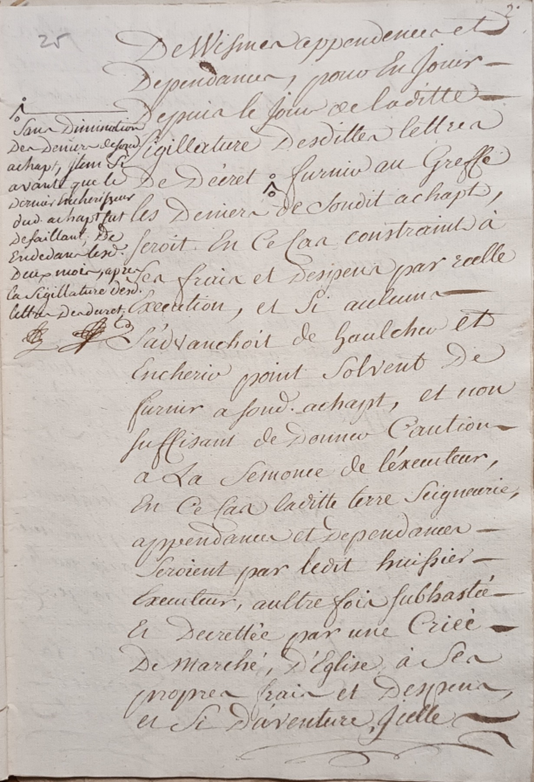
Echevins Dudit Wismer, En Leur Donnant Lesdits Commandements par Ecrit, pour En faire advertance audit Bailly a son retour, après quoy Ledit huissier ordinaire s’étoit aultre fois trouvé audit St Omer pour cercher Ledits Denombrement, y ayant parlé au Doyen De laditte Eglise cathédrale, attendu que Lad. Eveché Etoit vacante, lequel luy dit Delivrer Simplement par Ecript par le Bailly General mre antoine aubrou un Extrait De la partition de L’eveché De therouane, Entre les Deputés des majestés Catholiques et très Chrestiennes passée En La Ville D’aire le vingt neufvieme de juin quinze Cent Cinquante neuf, Contenant Entre aultres, que a l’Evesché qui Seroit erigé Du Costé Du Roy Catholique au Lieu de l’evesché De therouane Demeureroient et appartiendroient les fiefs Suyvants, mouvans et tenus de la Salle Episcopale Dudit therouane, Entre aultres la terre de Wismes, Estant aussi Declaré par ledit Extrait que Le fief de L’advoucrie Dudit therouane tenu et mouvants de Laditte Sale Demeureroit aux Deux Evesques par judivix, pour en prendre et percevoir les fruits par moitiés, sans que ledit huissier avoit sien Recouvrer Les Denombrements ou aultre enseignement autenticque de ce que dit Est et s’Estant Ledit huissier trouvé après vers ledit sieur d’allouagne Le vingt unieme Dudit mois a l’effet que Dessus luy auroit communiqué ledit Extrait, lequel avoit Sur Ce soutenu que lesdits Deux Roys, n’avoient peu Donne ou appointer quelque chose En son préjudice et Expressement aussi soutenu, que laditte terre Et seigneurie De Wismes n’étoit tenue de personne que De luy, a cause de laditte advouerie De therouane achapté par feu son père, et En passant ledit huissier par aire et Bethune au retour vers arras avoit illecq ? respectivement affixé samblables Billets aux fins susdites et aussi en arras plusieurs, en laquelle Ville d’Arras il auroit insinué le sieur De marle Desd. premières Criées et ce en qualité De tuteur dudit Sieur Comte D’Hoochstraate moderne, afin de ne pretendre Cause D’ignorance qui requeroit avoir par Ecrit laditte Declaration De Wismes, ceque ledit huissier luy avoit Delivré, et Le lendemain qui fut le quinzieme De fevrier Seize Cents, insinué Samblablement De ce que Dessus le Sieur de hachicourt aussi tutteur dudit sieur Comte, aux fins que Dessus, après quoy, et que ledit huissier ordinaire avoit parfait Les Deuxiemes Et troisieme Criées, Selon le contenu de La Relation qu’il mit Es dudit huissier ordinaire y celuy ordinaire s’Estoit trouvé Endits Lieux De St omer et Wismes aux jours Susdits, où il fit lesdittes quatrieme criée, en y observant Les solennités et Devoirs Susdits y Déclarant et insérant lors en lesdits Billets, que Le Dernier jour Dudit mois de février seize cent, a Dix heures Devant Diner, a L’aigle D’or aud(it) St omer il Devoit allumer la Chandelle, passer le marché, et donner la paulmée de laditte Seigneurie et terre de Wismes, appendances et dependances, Le tout avec ses hameaux, tenue de laditte advouerie De therouane, et ce a L’extinction D’un couppon de chandelle qu’il allumeroit sur ledit marché, sur les conditions a y Déclarées et au surplus tout ce qu’il avoit inseré aux premiers Billets et En outtre qu’il adjourneroit En vertu desdittes Lettres Executoriales, lors tous Ceux qu’il appartiendroit, et Ledit Dernier jour de fevrier Seize Cent Venu, s’Estant Le dit huissier ordinaire trouvé En notre ville de St omer, au lieu et heure assigné En une Chambre Basse, y fit aux venus pour achapter ; Lecture Desdittes Conditions telles que Suivent, Primes qu’un Chacun Solvent seroit recu A haulcher et Encherir Laditte terre et seigneurie de Wismes appendances et Dépendances jusques a l’Extinction, deladitte Chandelle ; comme bon lui sembleroit et aussi après pour cinquante livres arthoisau coup, Bien enDessus mais point en dessus, et que L’achapteur seroit tenu payer son marché au Greffe de notre Grand Conseil, En or et argent Selon notre permission, Endedans Deux mois après La Signature De lettres De Decret, apeine D’Execution relle a ses frais et Despens, item Que Le Droit seigneurial deladitte terre et Seigneurie de Wismes, qui seroit du a celuy qui seroit dit par sentence de notre grand conseil, viendroit a la charge de l’achapteur, Sans Diminution des Deniers capitaux De son achapt, et que ledit achapteur pourroit obtenir telle moderation dudit Droit du sieur ou seigneur a qui appatiendront lesd. Droits qu’il pourroit obtenir, et si avant qu’on trouvoit en Wydant ledit Decret deladitte terre et Seigneurie qu’elle fut chargée Daulcunes rentes non rachaptables qu’on les Defalqueroit audit achapteur au Denier vingt cinq, item quiconque Demeureroit dernier encherisseur a L’Extinction de La Chandelle, Seroit tenu incontinent payer les mains dudit huissier Executeur, pour Denier a Dieu, au proufit des Pauvres quatre Livres arthois, et oultre ce Le bancquet Du Disner, tel que seroit compté avec l’hotesse, sans Defalcation de son achapt, et si avant que son marché ne luy Demeuroit a la levée du seau des lettres De Decret, le dernier rencherisseur luy seroit tenu rembourser Le Double, Desdits Deniers a Dieu et bancquet, Et Si D’avanture ledit Decret ne sortit son effet par aultre ordonnance, ou sentence De notre Grand Conseil, En Ce Cas seroit toujours remboursé, et payé Desdits Doubles par ledit administrateur Impetrant Dudit Decret, item que ledit Dernier Encherisseur a La Levée du seau Desdittes lettres De Decret, Seroit tenu a ses frais et Despens, lever au Greffe d enotre Grand Conseil, lesdittes Lettres De Decret, acte de Demeure Desondit achapt et lettre Executoriale pour En vertu d’ycelle être mis par huissier ordinaire, En La reelle et actuelle possession deladitte tere et Seigneurie
xxxxxxxxxxxxxxxxxxx
ENGLISH
Wismes N° 3, 12 July 1608
Tender for the sale of the lands of Wismes from the estate of Dame Eleonore De Montmorency (Memorency), Comtesse Douairière D'(h)oogstraete in favour of Jean Defasques, who declared that his client, the Sieur D’hannescamps….
Albert and Isabel Clara Eugenia, Infanta of Spain, by the grace of God Archdukes of Austria, Dukes of Burgundy, Lorraine, Brabant, Limburg, Luxembourg and Guelders, Counts of Habsburg, Flanders, Artois, Burgundy, Tyrol, Counts Palatine of Hainaut, Holland, Zeeland, Countess of Namur and Zutphen, Margraves of the Roman Empire, Lords of Friesland, Salms, Maline, the city and country of Utrecht, Oberijssel and Groningen, greetings to all who see, read or hear these decree letters of ours.
Mr Jehan van der Laen, Knight, Lord of Schriel Grootloo, administrator of the estate of the Blessed[1] Lady Ele(o)nore de Montmorency, Comtesse Douaire[2] of Hoogstraate, had acquired our letters of exemption dated 14 July 1599 for the numerous creditors of the said estate, in order to be able to sell some of the goods of this estate by decree and at public auction. By virtue of our letters of exemption, he has François de Brume, ordinary bailiff of our Grand Conseil[3], confiscate the lands and the feudal estate of Wismes with their appurtenances and place them legally in our hands. The aforementioned bailiff was supposed to inform himself in our city of Arras by whom these lands and this lordship could be held and to find their lieges[4], but found none other than an old one, no longer in our city of Arras, but in St. Omer, of whom no information could be obtained. Omer, from whom no information could be obtained which could be followed, and having finally understood that this lordship was held by the „Avouerie” (bailiwick)[5] of Théroenne[6], belonging to the lord of Allouaigne, he turned to the said lord, where he also found no other loan[7] than an old register and, as the said lord emphasised, that the said land and fiefdoms were held by him (in possession) by virtue of the aforementioned bailiwick, and by no other lord. According to him, the said blessed Comtesse, before she passed away, wanted to make a certain agreement and arrangement with him regarding the seigneurial rights before she would sell it, so he went to a certain Guillaume Proutoille, formerly collector of the levies for the said lands and feudal lordship; The latter did not know how to give him any other loan than an old one, of which he owned a part, and he only said verbally that these lands and lordship of Wismes were held by the aforementioned bailiwick of Thérouenne and the diocese of St. Omer, and that he would be able to sell[8] them. Having heard this, the bailiff went to the same town of St. Omer on 15 January 1600 at the request of the aforementioned administrator. In this town he had posted three criées and the fourth of the remaining one, in front of the wealthy people of our house [9]as well as at the church of the said Wismes. The first criée[10] was posted at the market in the said St. Omer on the above-mentioned day, the second on the 29th of the said month, the third on 12 February. Subsequently, the fourth and last one on the 25th of the same month, and the one at the church in said Wismes on the 30th of January 1600, (and on) 13 February. Hereafter the fourth and last on the 26th of the said month. The aforementioned bailiff Jean Zeant, extraordinary bailiff of the residence of our city of St Omer, affixed to each criées a large billet with the signature of the said bailiff, both at the cathedral of St Omer and at the hut on the corn market, and at the gates of the said city and at the door of the church of Wismes. All this to ensure that everyone might be informed of the said criées and the sale, and that no one might feign ignorance of it; and thereupon he had written that these lands and fiefdoms of Wismes, their appurtenant and dependent estates and hamlets, such as St. Pierre a fainte[11] with a parish church, as a filial church[12] of the church of Wismes, Cantemerle, Marival[13], Fourdebecque, Salverques[14], Flomaisnil and Cocquempot, are held by the bailiwick of Thérouenne (in possession), with 10 livres Parisis[15] as a fief[16], and 20 sols Parisis[17] as a camberlage[18], and from the diocese of St. Omer a similar emolument, providing high, middle and lower jurisdiction, with a bailiff, lieutenant, five echevins[19] and two sergeants, and to these lands and this lordship belongs a castle and a garden, altogether with the moat of the said castle seven Maß, also the fiefdom’s rent in money, due at Christmas. Of each year, (as) total cost with the fief of Marival[20] and the bestowal of interest, a total of 168 livres, 3 sols, 9 deniers, likewise measured in grain of our town of St. Omer, with the said fief of Marival[21] also due at Christmas, 13 rasieres[22], eight biguets[23], one lot[24], likewise in oat, including the bestowal of 127 rasieres, seven biguets, three and a half pints[25], as well as 361 capons and three quarters, as well as 16 geese, as well as 58 hens and three quarters of one, likewise in interest[26], due at Christmas, the first five deniers in money, as well as a pellote[27], two bougeons[28], a dozen nestels[29], as well as a needle, half a quarton of wax[30], and of course double that, in the case of the lands which owe the above-mentioned interest and acknowledgements, they owe to the owner. At the sale of the fifth denier[31], and in the event of death for the fief, double that, according to the annual valuation of grain and feathers, likewise seven and a half Maß of prepared flotisse[32], likewise the large terrage, eight of a hundred of manure[33] annually, likewise the small terrage[34] and tithe taken in the territory of Marival, against the chapel of St. Jean Evangeliste, half for half, likewise the Droit de tonlieu [35]and (Droit d’) afforage[36], likewise a garden of the Robars[37], containing six Maß, which is given as rent year after year, as well as three forests, one of which is called Sargérel and comprises about twenty-one Maß, the other Troncquoy, comprising eighteen Maß, and the third Salvecques, comprising about eighteen Maß, of which ten or twelve Maß and less are sold per year, likewise a wind-stone mill Baimal in the said Wismes with its appurtenant and dependent estates, likewise, as of these lands and this fiefdom seventeen or eighteen fiefs are held, of which the lord profits by sale, donation and transfer, the fifth denier for various fiefs, one at ten florins[38], the other at four florins, some at 50 sols, some at 30 sols, some at 20 sols and some at ten sols. All of them Parisis. With these heights[39], advantage and profit which the said lords had over the whole time or from which they could have profited in said lands and fiefdoms with their appurtenances. And the bailiff exhibited and gave for sale, by criée and public auction to the highest and last bidder, upon such charges and conditions as shall be declared on the day the candle is lighted and the sale held, for deniers to proceed therein to pay and satisfy the creditors of said estate, following the judgement as to preference and order made in our Grand Conseil, and likewise the costs of the execution and process of said decree. And four criées would be affixed to the gate of the church, from fifteenth to fifteenth without distinction in our town of St Omer and Wismes respectively. And for the execution of the said fourth and last criée, one would declare the day, time and place on which one would light the said candle[40], make the sale and give the Pauline[41] of the said interest.
[1] Here: deceased.
[2] Lat. doarium; lifelong right of use to provide for a widow, usually a real estate promised at the time of
marriage. Often equated with the Germanic wittum.
[3] A council set up from 1497 onwards to relieve the Conseil du Roi of legal tasks (e.g. in the event of disputes
over property, petitions from subjects, etc.).
[4] A Vassal who owes feudal allegiance to their lords.
[5] In feudal law, the avoué (Latin advocatus) is a layman who represents the temporal interests of an abbey or
chapter; the French word appears at the beginning of the 13th century. The German term Kastvogt is first
used in Alemannic and Swabian sources, for the first time in 1130 (diploma of Emperor Lothar III, copy
from the 15th century), but mainly in the late Middle Ages, when great lords who held this office affirmed
and demanded their protective function. This enabled them to interfere in the economic life of ecclesiastical
institutions (hence the German name, Kasten means storehouse), to control the jurisdictions they held and to
represent them in the world and in court, while receiving the associated income.
[6] Therouane in the original.
[7] What the liege has in fief from the feudal lord.
[8] Relevé: to vacate in the sense of giving up or receiving a fief.
[9] Unclear, maybe in front of the brave people of our house? Original: Devant les Vailles de notre maison
jllecq
[10] The publication in court of the items to be auctioned or reduced in price.
CRIÉE is the name given to the formality that is essential for the decrees and consists of four publications
that are posted on the doors of the parish churches and in the market of the place where the sale is to take
place. They are also called the four fortnights because there must be an interval of 14 days between them.
[11] Unclear.
[12] French secours, church that is not a parish of its own, but serves as a relief and aid to a parish church when
there are too many worshippers, great distances or difficult routes.
[13] In the original: jmarival.
[14] Salvêque.
[15] Currency according to the Paris value calculation, in contrast to the Livre Tournois or Livre Arthois, which
have a different value.
[16] Relief, also used as a synonym for fief according to Nicot 1606. Occurs several times in the following.
[17] Smaller currency unit of the livre (sou).
[18] Also cambrelage or chambellage, certain monetary fief obligation of a „chamberlain”.
[19] Officer elected by the citizens to take care of police and municipal affairs for a certain period of time, cf.:
Dictionnaire de l’Académie française, 4th edition 1762.
[20] In the Original: morinal.
[21] Handwritten correction in the original from morinal to morival.
[22] Old measure for grain and areas, 70 litres + 14 centilitres, cf.: Émile Littré: Dictionnaire de la langue
française (1872-77).
[23] Must be a measurement when viewed in context, but cannot be researched in this manner, with a document
that had been overwritten many times, not even in lists of measurements.
[24] Measurement in French Flanders; 1 Lot consists of 4 Pints, see: Supplément au Glossaire de la langue
romane, Roquefort 1808.
[25] Measurement in French Flanders; 4 Pints make up for 1 Lot, cf. Roquefort 1808.
[26] In the original: rentes de recoignoissances.
[27] A ball?
[28] Sagitta capitata, thick arrow with head or butt, cf.: Jean Nicot: Le Thresor de la langue francoyse (1606); or
misspelled for bourgeon = button?
[29] Ligulae hoedinae, straps or nestel made from buckskins, cf.: Nicot 1606.
[30] Chire, different spelling of cire.
[31] There is the denier tournois and the denier Parisis. Twelve deniers tournois make one sol tournois.
Twelve deniers parisis make one sol three deniers tournois (cf. Nicot 1606).
[32] Not to be determined, perhaps misspelled for florisse/fleurisse = blooming?
[33] advesture, cf.: Roquefort 1808.
[34] Crop share of the fields as leasehold.
[35] A type of indirect tax levied on the offering of goods on the market.
[36] A tax levied on the sale of wine.
[37] Can’t be determined, perhaps location? Name? Or for robinier = robinia?
[38] Former currency in the Netherlands.
[39] Sums or total.
[40] Vente à la bougie or à la chandelle: An auction in which bidding was allowed until the candle lit at the
beginning was extinguished.
[41] Possibly a different spelling for paulette, annual tribute by office holders to the king to fulfil their office, cf.:
Dictionnaire de l’Académie Française, 1st edition 1694.
DEUTSCH
Wismes N° 3., 12. Juli 1608
Ausschreibung durch Erlass der Ländereien von Wismes aus dem Nachlass von Dame Eleonore De Montmorency (Memorency), Comtesse Douairière D'(h)oogstra-ete zu Gunsten von Jean Defasques, welcher erklärte, sein Auftraggeber, der Sieur D’hannescamps….
Albert und Isabel Clara Eugenia, Infantin von Spanien, durch die Gnade Gottes Erzherzöge von Österreich, Herzöge von Burgund, Lothringen, Brabant, Limburg, Luxemburg und Geldern, Grafen zu Habsburg, Flandern, Artois, Burgund, Tirol, Pfalzgrafen zu Hennegau, Holland, Seeland, Gräfin zu Namur und Zutphen, Markgrafen des Römischen Reiches, Herren zu Friesland, Salms, Maline, der Stadt und des Lands Utrecht, Oberijssel und Groningen, allen, die diese unsere vorliegenden Dekretbriefe sehen, lesen oder hören, ein Gruß.
xxxxxxxxxxxxxxxxxxxxx
ROMÂNĂ
Wismes, N° 3, din data de 12 iulie 1608.
Albert și Isabel Clara Eugenia, Infanta Spaniei, prin harul lui Dumnezeu Arhiduci de Austria, Duci de Burgundia, Lorena, Brabant, Limburg, Luxemburg și Geldern, Conți de Habsburg, Flandra, Artois, Burgundia, Tirol, Conți Palatini de Hainaut, Olanda, Zeeland, Contesă de Namur și Zutphen, Margrafi ai Imperiului Roman, Lorzi din Friesland, Salms, Maline, orașul și țara Utrecht, Oberijssel și Groningen, salutări tuturor celor care văd, citesc sau aud aceste decrete ale noastre.
Domnul Jehan van der Laen, cavaler, lord de Schriel Grootloo, administrator al averii răposatei[1] Doamne Ele(o)nore de Montmorency, contesă Douaire[2] de Hoogstraate, a obținut scrisorile noastre de scutire cu data de 14.07.1599 pentru
xxxxxxxxx
[1] Defunctei.
[2] Lat. doarium; Drept de folosință pe viață pentru întreținerea unei văduve, de obicei bunuri imobiliare promi-
se în momentul căsătoriei. Adesea asimilat cu termenul germanic Wittum (bani pentru răscumpărarea
miresei).
De atunci, Ysaure De Wavre, care pretinde că este administratorul moștenirii actualului conte D’Hoochstraate, a recunoscut că procedura menționată va fi fuzionată cu o altă procedură anterioară, desfășurată în fața Marelui nostru Consiliu în legătură cu aceeași chestiune. Petiționarul menționat a fost de acord cu acest aspect și instanța menționată a dispus ca procedurile menționate să fie contopite, astfel încât să se poată judeca în mod corect. Prin urmare, procedurile menționate au fost retrimise la registratura Marelui nostru Consiliu. În acest context, petiționarul sus-menționat și mai multe părți ne-au implorat să le administrăm dreptatea, reprezentați fiind de împuterniciţii și avocații lor în fața Marelui nostru Consiliu.
L-am informat că s-a luat notă și s-au examinat cu atenție documentele procedurale și s-au luat în considerare, de asemenea, punctele ridicate în acest caz și că, prin urmare, a părut firesc pentru el să anunțe o consultare în care totul a fost examinat cu atenție. Prin prezenta hotărâre judecătorească definitivă, pronunțată în biroul și prin decretul nostru după criées-urile și licitațiile menționate, terenurile și feudele Wismes menționate, cu toate accesoriile și bunurile aferente, sunt atribuite în favoarea cumpărătorului sau cumpărătorilor care au fost ultimii ofertanți la momentul aplicării sigiliului scrisorilor de decret, sub rezerva condițiilor și particularităților expuse pe larg în raportul aprodului. Și i-am ordonat și i-am poruncit să plătească această achiziție pe baza scrisorilor de decret,xxxxxxxxxxxxxxxxxxxxxxxxxxxxx
La 9 iulie 1608, Dame Anne de Lalaing Douariere de Thoré a informat tribunalul menționat că, la fel ca decretele și vânzările terenurilor și drepturilor de feudă din Wismes, Achiet le Grand, Liencourt, Bellencourt, le Bois de Fay Saint Pierre și alte proprietăți, cu toate anexele și dependențele lor, care aveau să fie urmărite de administratorul menționat, au fost amânate de tribunal pentru ziua respectivă și pentru zilele următoare, deoarece, în ziua stabilită, nu au existat cumpărători și ofertanți care să ofere un preț proporțional cu valoarea, deși se părea că vânzările menționate ar fi ușor de realizat, deoarece terenurile și seignoriile menționate erau deja în posesie, și anume Wismes o cincime și alții o cincime din cele patru cincimi ale doamnei prezentatoare menționate, pe care le primise ca moștenire testamentară de la mătușa sa, Demoiselle Françoise de Montmorency. Această parte i-a fost atribuită chiar printr-o hotărâre judecătorească, pe care a câștigat-o împreună cu prințul de Tingry, ginerele ei, căruia îi aparținuseră veniturile din respectiva a cincea parte încă de pe vremea când doamna respectivă locuia cu răposatul Seigneur de Thoré, după cum s-a decis într-o sentință din 14 februarie 1604. Faptul că aceste cincimi au deja proprietari ar putea reduce considerabil prețul vânzărilor respective, în detrimentul creditorilor proprietății respective. Pentru a evita acest risc, la 17 aprilie anul curent, instanța menționată a ordonat părților să se prezinte în fața aprodului, care va propune diverse modalități de facilitare a vânzărilor menționate. După mai multe întâlniri și comunicări ulterioare, numita Dame de Thoré a declarat că ar fi şi ea de acord să își vândă a cincea parte împreună cu celelalte părți, cu condiția ca partea sa din fonduri să îi fie plătită fără a fi distribuită.
Drepturile de proprietate feudale și cheltuielile justificate în legătură cu Lettres d’Octroy [1] dacă există, ar fi pe cheltuiala sa, desigur numai dacă ar dobândi terenuri sau părți de terenuri. În acest caz, cota care îi aparține în aceasta din urmă ar rămâne fără nicio vânzare. Având în vedere faptul că era fiica mai mare a familiei D’Hoochstraate menționate anterior, creditoare a acesteia din urmă și – din moment ce concesionase cele de mai sus pentru un profit mai mare pentru creditori – în cazul în care ar fi cumpărat părți din terenurile menționate anterior, i s-ar fi acordat alte condiții gratuite, de exemplu, în loc de o lună pentru depunerea banilor, cinci sau șase luni pentru depunerea banilor pentru părțile și cotele pe care le-ar cumpăra, fără a putea plăti în numele [sub pretextul?] depunerii respective în beneficiul venitului, ceea ce era dezbătut și astăzi. În prezența administratorului și a comisarilor delegați pentru aceste vânzări, acesta din urmă ar fi declarat încă o dată că este de acord cu oferta, considerând că instanța va judeca numai pe baza autorității sale în cerere. În acest scop, doamna menționată a implorat instanța să decreteze intențiile și înțelegerile de mai sus și să se angajeze să judece în legătură cu petiția exprimată astăzi în aceiași termeni ca și în hotărârile anterioare, și a solicitat ca aceasta [petiția] să fie prezentată și comunicată administratorului neîntârziat.
[1] Act de autorizare a preluării drepturilor de trecere.
Astăzi, 12 iulie 1608. iulie 1608, membrii Marelui Consiliu i-au convocat pe domnii și principii noștri cu scopul sigilării acestor scrisori de decret, după două proclamații și alte ceremonii care se respectă de obicei, iar după mai multe oferte și reoferte pentru terenurile și drepturile de proprietate feudală de Wismes cu toate părțile anexe și dependente, acestea au fost acordate lui Jean de Fasques, care a declarat imediat că mandantul său este Sieur D’Hanescamp[1], care i-a eliberat o procură specială în acest scop, autentificată la data de 5 a lunii curente de Alexandre De Rougemont, notar, pe care a prezentat-o.
xxxxxxxxxxxxxxxxxxxxxx
[1] Hannescamp este o comună de dimensiuni reduse din actualul arondisment Arras din nordul Franței.
SRPSKI
Wismes (= Vismes), br. 3.
- jula 1608. godine
Aukcija dekretom zemlje Vismes iz imanja Dame Eleonore De Montmorenci (Memorenci), grofice Douairiere D'(h)oogstraete u korist Jean Defaskues-a, koji je izjavio da je njegov klijent, Sieur D’hannescamps….
Albert i Izabela Klara Euhenija, infantkinja iz Španije, milošću Božjom, pozdravlja nadvojvode Austrije, Burgundije, Lotringena, Brabanta, Limburga, Luksemburga i Gelderna, grofove Habsburga, Flandrije, Artoe, Burgunda, Tirola, Palatina do Henegau, Holandije, Zelanda, groficu iz Namura i Zutfena, markgrofove Rimskog carstva, gospodu iz Frislanda, Salmsa, Maline, gospodu iz grada i provincije Utreht, Oberejsela i Groningena, sve njih koji ova naša predočena dekretna pisma vide, čitaju ili slušaju. Gospodin Jehan od Lajena, Vitez, gospodin od Šrijeka Grotlu, upravitelj imovine upokojene[1] dame Eleonora de Montmorensi, Comtesse odn. grofice Douaire[2] iz Hoogstratena (Belgija), je za brojne poverioce gore pomenute imovine pribavio naša pisma o izuzeću, sa datumom od 14.07.1599. godine, da bi se neka dobra, koja će se i pronaći u ovoj imovini, mogla prodati putem dekreta i na javnoj aukciji. Snagom naših pisama o izuzeću, upravitelj će preko Fransoe de Brumea, redovnog sudskog izvršitelja našeg Velikog saveta[3], da preuzme velike zemljišne posede i vlast mesta Vismesa sa svim njegovim priključenim i pripadajućim delovima i da na zakoniti način sve ovo preda u naše ruke. Pomenuti sudski izvršitelj je u našem gradu Arasu (francuski grad) trebao da dobije informacije ko bi mogao da drži ove velike zemljišne posede i ovu vlast u posedu, a da bi opet mogao da povrati od tih zajmoprimaoca zajmove[4], ali nije pronašao nikog drugog nego jednog starog čoveka, koji više nije u našem gradu Arasu, nego u gradu Sveti Omer (Francuska), a taj stari čovek se nije mogao razumeti, da bi se na kraju navodno razumelo, da ovu vlast drži, odn. da je pod patronatom nekog Théroennea[5], a na dalje pripada nekom gazdi Alouanji, zatim se sudski izvršitelj obratio pomenutoj gospodi, ali on opet nije pronašao nikakav dalji zajam/ feud[6] nego samo jedan stari registar i, kao što je pomenuti gazda naglasio, (da) samo on drži pomenutu zemlju u vlasništvu i vlast po osnovu gore pomenutog patronata, i nijedan drugi gospodin. Nakon njegove izjave, pomenuta upokojena grofica je htela pre njene smrti da sa njim ranije zaključi izvestan sporazum i nagodbu, koji se odnose na prava svojine, a pre nego što bi ona izvršila prodaju, prenela bi svojinu na Guillaume Proutoille, nekadašnjeg/prevremenog primaoca navedenih velikih zemljišnih poseda i držaoca vlasti; ovaj isto nije znao da mu da neki bilo koji drugi feud, nego mu je dao jedan stari, čiji je jedan deo on posedovao, i on je samo usmeno rekao, da su ovi veliki zemljišni posedi i vlast Vismesa pod navedenim patronatom Terouane i eparhije grada Sveti Omer, i da je on njemu jednom nekada po naredbi ustupio[7] odgovarajuće zemljišne posede. Kako je to navedeni sudski izvršitelj razumeo, ovo je preneto 15. januara 1600. godine na zahtev upravitelja u ovom istom gradu Sveti Omer. U ovom gradu je on takođe izvršio/preduzeo tri podele dobara i četvrtu još uvek preostalog dela, pred bogatima[8] naše kuće tamo, isto tako kao i u crkvi u pomenutom Vismesu. Prva podela je izvršena kupovinom u pomenutom gradu Sveti Omer, gore pomenutog dana, druga je izvršena 29.-og dana u gore pomenutom mesecu, treća 12. februara. Naredna četvrta i poslednja podela je bila 25.-og u istom tom mesecu, i onih crkava u pomenutom Vismesu 30.-og dana u januaru mesecu 1600. godine, na dan 13.-og februara. Naredna četvrta i poslednja podela usledila je ponovo 26.-og u navedenom mesecu. Pomenuti sudski izvršitelj Jean Zeant/Žan Zeant ili Zent, vanredni sudski izvršitelj sa prebivalištem u našem gradu Sveti Omer, kod svake podele dobara stavljao je veliki biljet ispod potpisa navedenog redovnog sudskog izvršitelja, kako na katedralnoj crkvi Svetog Omera, kao i na kolibi na Kornmarktu (centralni, glavni trg), i na kapijama navedenog grada i na vratima crkve u Vismesu. Sve ovo urađeno, da bi svako bio obavešten o navedenim podelama dobara i prodaji, i da nikoga ne bi moglo da zavara neznanje o ovome/niko ne bi mogao da se pretvara kao da nije znao ili da nije obavešten o ovim dešavanjima; i on je pored navedenog napisao, da se ovi veliki zemljišni posedi i vlast Vismesa, uz njegova pripadajuća i zavisna dobra i njegovih zaseoka, kao i Sen Pjer de Fainte sa jednom glavnom župnom, podružnom crkvom[9] iz Vismesa, iz Cantemerle, iz Marival[10], iz Fourdebecque, iz Salverques[11], iz Flomaisnil i iz Cocquempot, nalaze pod patronatom Terouane u posedu, sa 10 pariskih livri[12] kao zemljišni posed/u vidu zajma[13], i 20 pariskih sua/sou[14] kao Camberlage[15], i od eparhije Sveti Omer slična nadoknada, a koja ima visoku, srednju i nižu nadležnost – kao crkvena vlast, sa opštinskim predsednikom, poručnikom, pet službenika[16] i dva narednika, i ovim velikim zemljišnim posedima i ovoj vlasti pripada jedan zamak i jedna bašta, zajedno sa navedenim dvorcem sedam mere, isto tako kamata na svojinu u novcu, sve ovo navedeno dospeva za Božić. Od svake godine, (kao) ukupni troškovi sa zemljišnim posedom iz Marivala[17] i davanjem kamate, ukupno 168 livri, 3 sua, 9 denara, isto tako u merama za žito našeg grada Svetog Omera, sa navedenim zemljišnim posedom Iz Marivala[18] isto tako za Božić dospeva, 13 Rasieresa[19] osam Biguetsa[20], jedan visak/olovnica[21], isto tako u žitarici ovas[22], uključujući pozajmljivanja 127 Rasieresa, sedam Biguetsa, tri i po pinte[23], isto tako uškopljene petlove/kopune, 361 kopuna, i tri četvrtine, isto tako guske, 16 gusaka, isto tako kokoš – 58 kokošaka i tri četvrtine (od) jedne, isto tako još po odobrenoj/povratnoj kamatnoj stopi[24], dospelost za Božić, prvi u novcu pet denara, isto tako jedna Pellote[25], isto tako dve Bougeons/strele[26], takođe 12 komada Nestel – vezica/vrpca sa kopčom[27], takođe jedna igla, isto tako pola četvrtine voska[28], i naravno duplo, kod velikih zemljišnih poseda, (oni) koji duguju gore navedene kamate i druge obaveze, oni to u stvari duguju Gospodu. Kod prodaje peti denar[29], i u slučaju smrtnog slučaja za feudalni posed duplo, na osnovu godišnje procene žita i perja, isto tako sedam i po mera na pripremljene flotisse[30], isto tako veliki Terrage[31], osam od sto Dunga[32] godišnje, isto tako mali Terrage i desetinu prihoda koji se ubiraju na području Marivala, a na području Kapele Svetog Žana Evangeliste uzima se pola za pola, isto tako Droit de tonlieu[33] i (Droit d´) afforage[34], isto tako bašta – vrt Robars[35], uključujući šest mere, ono što se daje kao prihod iz godine u godinu, isto tako tri šume, od kojih se jedna naziva Sargerel i koja obuhvata oko dvadeset i jedan Mesures, druga se naziva Tronkuoi, obuhvata osamnaest Mesures, i treća Salveke, obuhvata otprilike osamnaest Mesures, od kojih se godišnje proda deset ili dvanaest Mesures, a i manje, isto tako još jedna vetrenjača Baimal pomenutog Vismesa sa pripadajućim i zavisnim dobrima, isto tako, kao što ovi veliki zemljišni posedi i ova vlast drže sedamnaest ili osamnaest feudalnih poseda, od kojih gospodar profitira, i to pri prodaji, poklanjanju i prenosu, peti denar za različite feudalne posede, jedan za deset florina[36], drugi za četiri florina, neki za 50 sua, neki za 30 sua, neki za 20 sua i neki za deset sua. Svi dotični (su) pariski. Sa ovim visinama[37], prednošću i profitom, kojim su pomenuti gospodari sve vreme raspolagali ili od kojih su mogli da profitiraju, a to su pripadajuća i zavisna dobra u okviru pomenutih velikih zemljišnih poseda i pomenute vlasti. Sudski izvršitelj je njih izložio i stavio na prodaju, putem podele dobara i javne aukcije, o trošku i pod uslovima, koji bi bili objavljeni onog dana, kada se zapali sveća[38] i kada se održi sajam, za denare, a sve ovo da bi se postigao napredak u tome, da bi se i dalje radilo na tome, da se poverioci pomenute zaostavštine plate i namire, a uz to prateći presudu vezanu za povlasticu i redosled, koja je izrađena u našem Velikom savetu, i isto tako imajući u vidu troškove sprovođenja i postupak gorenavedenog dekreta.
A na osnovu ovoga bi se izvršile četiri podele dobara tržišta i crkve, od petnaestog do petnaestog, bez razlike, ili u našem gradu Sveti Omer, ili u Vismesu. Što se tiče izvršenja navedene četvrte i poslednje podele dobara, naveo bi se dan, vreme i mesto, kada bi se zapalila gore pomenuta sveća, izvršila prodaja i kada bi se dale pauline[39] od pomenute kamate.
U slučaju kad bi, nakon što bi se potvrdila tržišna prodaja u našem Velikom savetu, a prilikom uklanjanja pečata sa dekretnih pisama, postojale neke muške ili ženske osobe, koje bi htele da utvrde vrednost za navedeni veliki zemljišni posed i vlast sa pripadajućim i zavisnim udelima/prinosima, ili koje bi pak želele da se odupru, koje bi se protivile pomenutoj prodaji, podelom dobara i javnim aukcijama, pa bi zahtevale neka prava iz ovoga, podnosile bi tužbu ili bi polagale pravo na kamatu ili na denare, koji potiču iz ove prodaje, te osobe bi mogle doći kod pomenutog sudskog izvršitelja, ili, u njegovom odsustvu, kod pomenutog vanrednog sudskog izvršitelja iz Svetog Omera, mesta njegovog prebivališta, koji će pomenutu drugu i treću podelu dobara da nastavi, kao i da nastavi sa objavama/proklamacijama. I onda bi oni bili prihvaćeni, odn. njihovi prigovori bi bili prihvaćeni, dok bi oni, koji ovo propuste/zanemare, njihova navodna prava i pravo na tužbu bi zauvek bila oduzeti, pravno odbačeni i bili bi isključeni iz njih, shodno naredbama našeg Velikog saveta. Ovi biljeti sadržavali su osim toga kroz jedan drugi član, da je pomenuti redovni sudski izvršitelj pomoću ovog istog biljeta, a na osnovu pomenutih pisama o izuzeću, uputio naredbu poimence/po imenu na stanovnike Vismesa, a koji su zakupci polja – njiva, šume i mlina, od tada pa nadalje da ne plaća kamatu gore pomenutom Gujlaumeu Kutojeu sve dok navedeni Kutoj ne dobije bilo koje drugo uputstvo od navedenog administratora, ili dok ne položi novi depozit/ jemstvo, kako bi isplatio novčani iznos gore pomenutom Vismesu, shodno naredbi od 17. januara 1600. g. koju je sudski izvršilac Gijom Lefevre naredio Fransoa Rovaru, Robertu Lekleru i Gijomu Gamiotu Échevini[40] iz Vismara, kojima je to pismeno naređeno, tako da o ovome treba da obaveste Baija[41] nakon njegovog povratka. Pomenuti sudski izvršitelj je još jednom otišao za Sen Omer, radi dobijanja navedene pozajmice – kredita.
[1] = Preminule
[2] Lat. doarium; doživotno pravo korišćenja u cilju zbrinjavanja udovice, obično su to posedi, koji su
obećavani pri zaključivanju braka. Često se ova reč izjednačava sa germanskom reči Wittum, koja se
tumači kao udovičin deo zaostavštine.
[3] To je Savet, koji je osnovan 1497., da bi rasteretio Kraljevski savet od administrativnih zadataka
(npr. kod sporova oko imanja, određenih primanja molbi, ili žalbi od strane podanika, itd.).
[4] Vazali, koji imaju, odn. bolje rečeno koriste feudalno imanje.
[5] U originalu: therouane.
[6] Ono što vazal ima da pozajmi od feudalnog gospodara.
[7] Relevé: ustupiti u smislu predati, napustiti, ili drugo takođe primiti/dobiti u posed feud.
[8] Nejasno, ili pred hrabrima, odvažnima? U originalu: Devant les Vailles de notre maison jllecq.
[9] Francuski. secours, crkva, koja nema svoju samostalnost, nezavisnost, već služi glavnoj župnoj – mesnoj
crkvi kao pomoć i rasterećenje, npr. kod velikog okupljanja vernika, u slučaju velike razdaljine ili teških,
nepristupačnih puteva.
[10] U originalu: jmarival.
[11] Salvêque.
[12] Valuta prema Pariskom obračunu vrednosti, za razliku od livra iz Turnojsa, ili livra iz Artoe, koji imaju
drugu vrednost.
[13] Relief, prema Nikotu 1606. takođe se koristio kao sinonim za feudalni posed. Javlja se nekoliko puta u
nastavku.
[14] Manja valutna jedinica od livre (sou ili su).
[15] Takođe Cambrelage ili Chambellage, određena obaveza davanja zajma u novcu od strane „blagajnika”.
[16] Oficir (službenik) izabran od strane građana, koji se u jednom određenom vremenskom periodu stara o
policijskim i gradskim poslovima u nadležnosti tog grada , cf.: Dictionnaire de l’Académie française, 4.
izdanje 1762.
[17] U originalu: morinal
[18] Ispravljeno ručno u originalu sa morinal u morival.
[19] Stara mera za žito i zemljane površine, 70 litara + 14 decilitara, cf.: Émile Littré: Dictionnaire de la langue
française (1872-77)
[20] Imajući u vidu kontekst ovo bi morala da bude neka mera, ali na ovaj način nije moguće istražiti, pošto je
ručno više puta na jači način prepisivano, a takođe to nije moguće ni u evidencijama, koji se odnose na
masu.
[21] Mera u francuskoj Flandriji; 1 visak se sastoji od četiri pinte, cf.: Supplément au Glossaire de la langue
romane, Roquefort 1808.
[22] Ovas – zob.
[23] Mera u francuskoj Flandriji; četiri pinte daju jedan visak, cf. Roquefort 1808.
[24] Rentes de recoignoissances.
[25] Lopta, kugla, predmet loptastog – okruglog oblika?
[26] Sagitta capitata, debela strela opremljena sa glavom ili klipom, cf.: Jean Nicot: Le Thresor de la
langue francoyse (1606.); ili se mislilo na bourgeon, dugme, čvor?
[27] Ligulae hoedinae, kaiš ili vrpca – vezica od jareće kože, cf.: Nicot 1606.
[28] Chire, drugi način pisanja – stil za cire.
[29] Postoji denar iz Tournoisa i pariski denar. Dvanaest denara iz Tournoisa daju jedan sou iz Tournoisa.
Dvanaest pariskih denara daju jedan sou tri denara iz Tournoisa (cf. Nicot 1606.).
[30] Ne može se tačno ustanoviti šta ovo znači, možda greška u pisanju, a mislilo se na florisse/fleurisse,
cvetanje, u cvetu?
[31] Plodni deo njiva, koji bi služio za zakup.
[32] Advesture, cf.: Roquefort 1808.
[33] Neka vrsta indirektnog poreza, koji se naplaćivao – ubirao na osnovu ponude robe na tržištu.
[34] Porez na prodaju vina.
[35] Ne može se zaključiti, možda mesto? Ime? Ili za robinier/Robinie?
[36] Gulden.
[37] = Sume, iznosi (novčani).
[38] Vente à la bougie ili à la chandelle: Aukcija, na kojoj je bilo dozvoljeno da se nudi onoliko dugo, dok se
ne ugasi prvobitno zapaljena sveća.
[39] Verovatno se ovde mislilo na paulette, nego je drugačije napisano, godišnji namet od nosioca vlasti – pre-
nošen na kralja, da bi obavljao svoju funkciju, cf.: Dictionnaire de l´Académie Française, 1. izdanje 1694.
[40] Zamenik ili privremeni zamenik gradonačelnika.
[41] Sudski izvršitelj.
Informații suplimentare
| Variation | Caiet manuscris, Portret semant de Rubens, Translation French, Translation English, Translation German, Translation Romanian, Translation Serbian |
|---|
Produse similare
Produse similare
-

Pergament Cultura slavoromână – Vamiașul și fariseul
400 € -

Ars notariae
3.030 € – 3.200 € Acest produs are mai multe variații. Opțiunile pot fi alese în pagina produsului. -

Epistolele Sfântului Ieronim
5.000 € -

Cartea Coranului
5.000 €